How we helped ViD Elektro digitize complaint handling
Before this system, complaints were logged in a CRM, but the conversation continued across email, documents, and whichever employee happened to be handling it that day. A case existed somewhere, but no single view showed its whole path.
Once a complaint passed between people, it was rarely clear who currently owned it, which documents were already attached, or what had last been agreed with the customer. The team often searched email or asked a colleague before they could even start resolving the case.
The business needed one system where every case is assigned, traceable, and visible to the right person immediately, so we built a platform connecting public intake, internal operations, and store data into one clear flow.
From submission to resolution in one clear flow
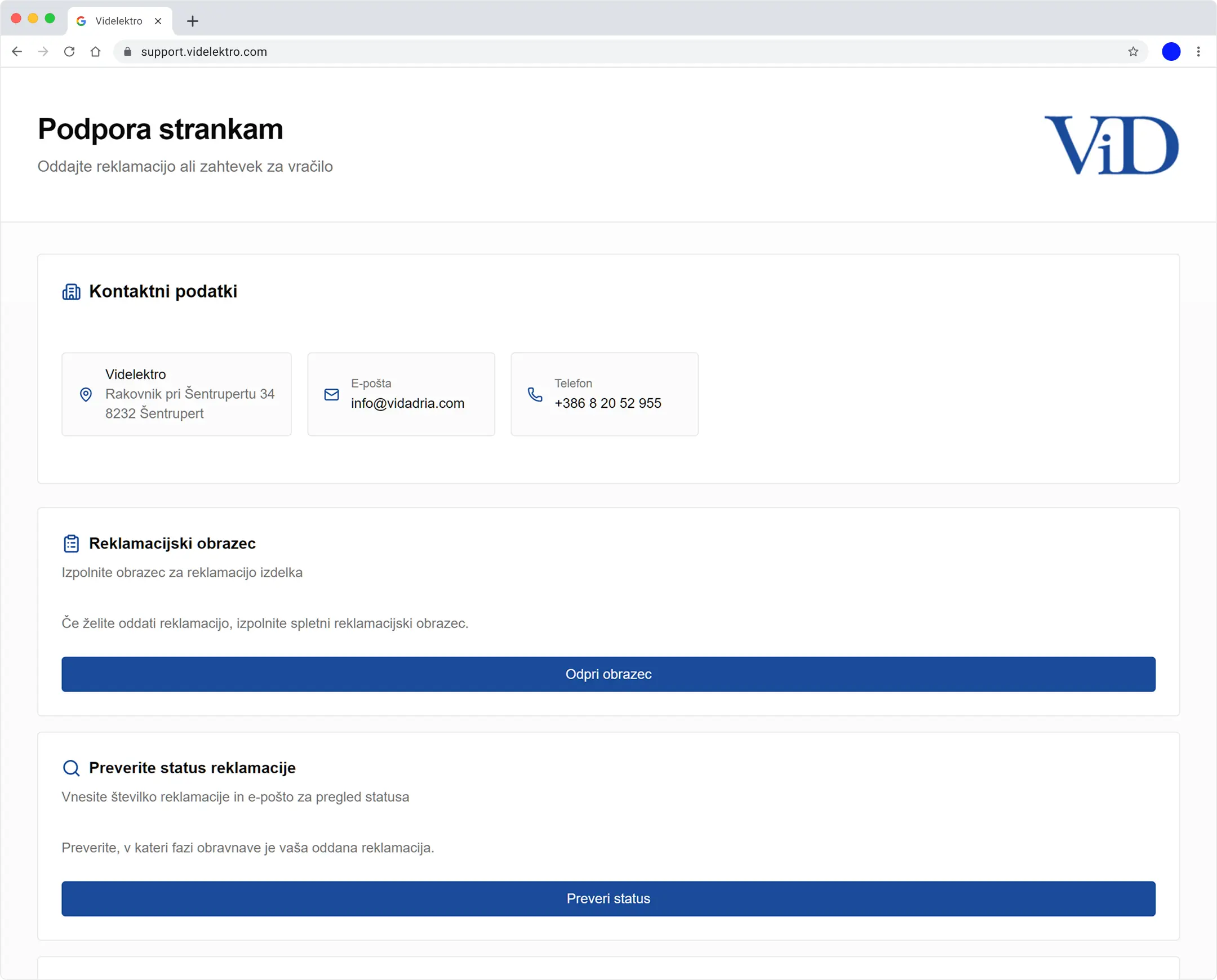
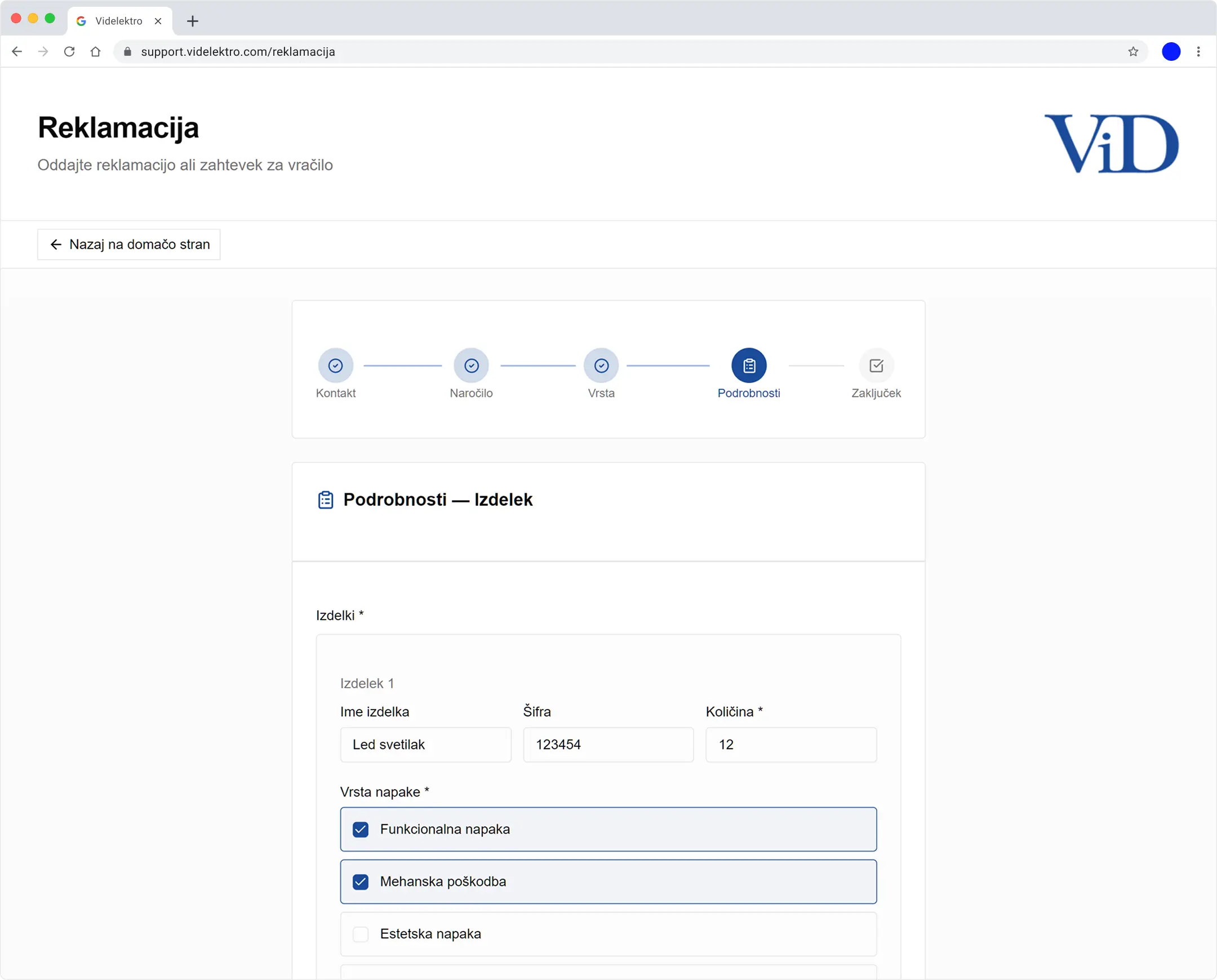
We built a public intake portal where a customer submits a complaint through a structured form, describes the issue, and attaches the required documentation. The case is created automatically in the internal system the moment it is submitted.
The platform connects directly to their ecommerce backend, so order and product data are available in the same case the moment the team opens it, with no manual lookups or re-entry.
Internally, every case carries clear status, ownership, and a full activity history, so the team always has the context and documentation they need for the next step.
“Most of the friction was never the complaint itself. It was not knowing where a case stood or who was handling it.”
Less administration, more time spent resolving cases
Users move securely between portals for different brands or teams, seeing only the cases and data they are permitted to access, which keeps one system workable even across a multi-brand operation.
For incoming emails and documents, an agent prepares a draft complaint for the team to review. Staff start from gathered information instead of a blank form, while still confirming every meaningful step themselves.
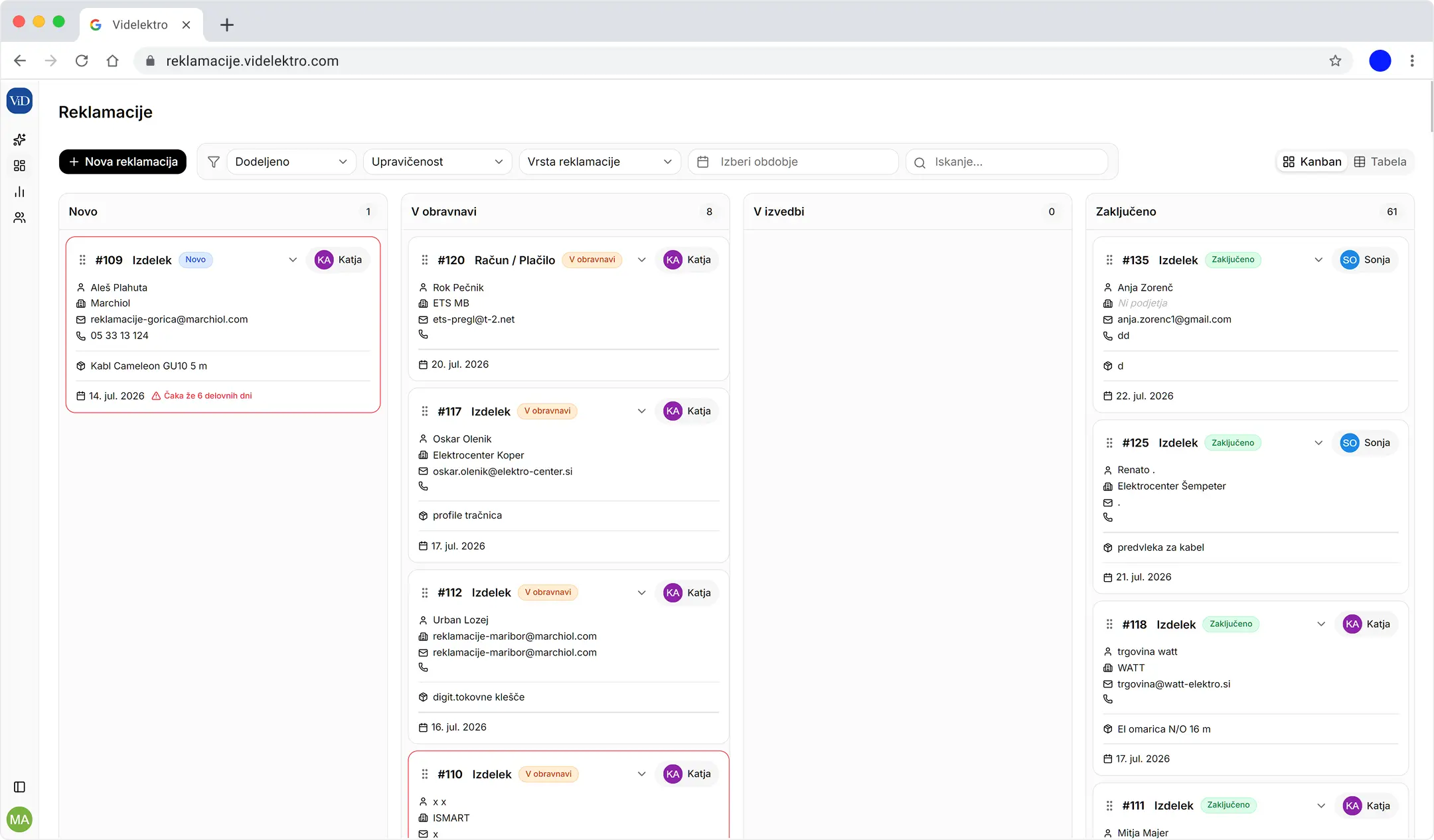
All data shown is adapted for use in this case study.
Result: a faster, clearer operation
100
complaints handled per month
< 5 min
to process a single complaint
41+ hrs
less admin work every month
Before this system, resolving a single complaint typically took around 30 minutes. Today, automation and an AI agent mean the team prepares and starts a case in under five minutes.
Across roughly 100 complaints a month, that is more than 41 hours of administrative work removed every month. Complaints now go straight into the system, immediately visible to the right team with a clear status, an assigned owner, and complete documentation.
The team no longer loses time searching email, checking CRM notes, or guessing what already happened on a case. They open it, see the full context, and move directly to resolving it and communicating with the customer.
Because data from the storefront and the intake portal is connected to the internal process, there is less manual work and fewer chances for errors in transferring information. Leadership also has visibility into open cases, complaint types, and resolution progress, making it easier to spot recurring issues early.